Using "color match" in photoshop to make two photogrammetric models made under different lighting conditions, more consistent.
Colour matching textures of two models with Photoshop.

Palaeontologist: Dinosaur Footprints – Biomechanics – Simulation
Using "color match" in photoshop to make two photogrammetric models made under different lighting conditions, more consistent.
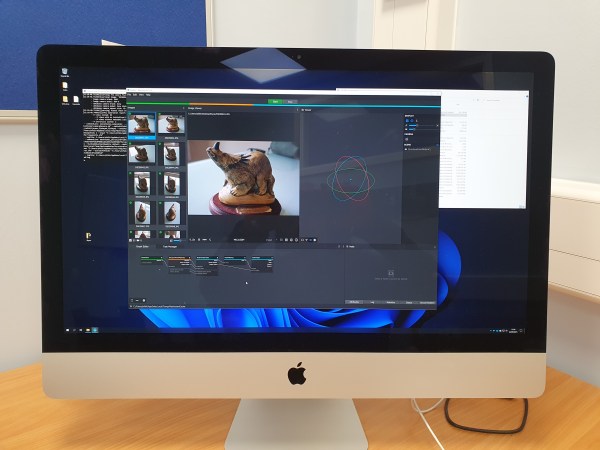
A little while ago I wrote about COLMAP-CL, a fork of the original project re-written so as to remove the reliance on CUDA, and therefore Nvidia GPUs. Now, from the same source, OpenPhotogrammetry on Github, comes Meshroom-CL. It's still in pre-release, at version 0.7, but I gave it a run through on my work iMac... Continue Reading →
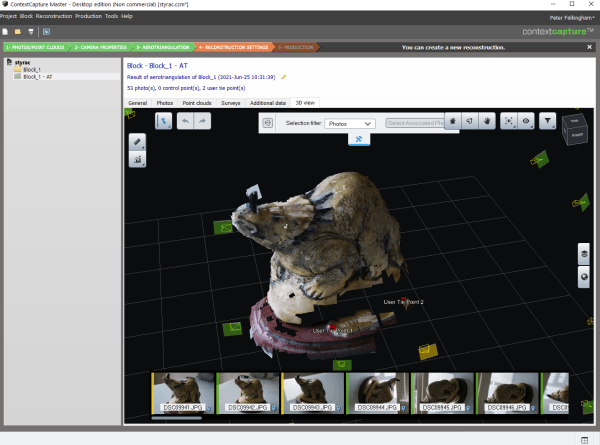
ContextCapture is Photogrammetry software from Bentley. In fact, it is a pretty comprehensive set of tools for photogrammetry, laser scans, meshing, GIS, etc. I was contacted by someone from Bentley, who asked me if I'd like to give it a test run. I was set up with a trial, but aside from that I've not... Continue Reading →

I scan a lot of 2.5D things. That is to say, 3D, but only a surface. Think dinosaur tracks, like this: One of the problems you can come across is if you want to 3D print something like this, it needs thickness. Visualization can also be helped if there’s context for the edges. I’ll outline... Continue Reading →

Last week the binaries for AliceVision Meshroom 2021.1.0 were released. I’ll take a look at what’s changed since the last time we took a look at Meshroom. Meshroom 2020 and texturing. The last time I posted specifically about Meshroom, it was version 2019.2. I didn’t make a post about 2020.1.0 mainly because texturing broke. Previously... Continue Reading →

I test out the Surface Pro X as a replacement for my Surface Go. I try out x64 compatibility too, using the latest Windows Insider preview.

Free software workflow from CT scan to FEA results
In these COVID times, I've been required to do all my lecturing online. LJMU have continued to give practicals face-to-face, but the lectures are being delivered via the internet. In almost all cases so far, I've given live lectures over Zoom, and this has worked really well. Not only have the lectures been delivered smoothly... Continue Reading →

It's been a few years since I've done a review of all the software I've tried. It's time to update that, with more free software, and the commercial (paid) software I've been trying out. I was trying to find a way to include a sort-able and filter-able table, but that requires a business plan apparently,... Continue Reading →

I’ve covered 3DF Zephyr before, both the free version, and the professional version. Today 3D Flow released version 5.0, which claims significant speed ups and quality improvements, so I thought I’d run my standard dataset through it. I'm using the 14 day trial version of Lite. The free version is still available but limited to... Continue Reading →
 Prof. Peter L. Falkingham