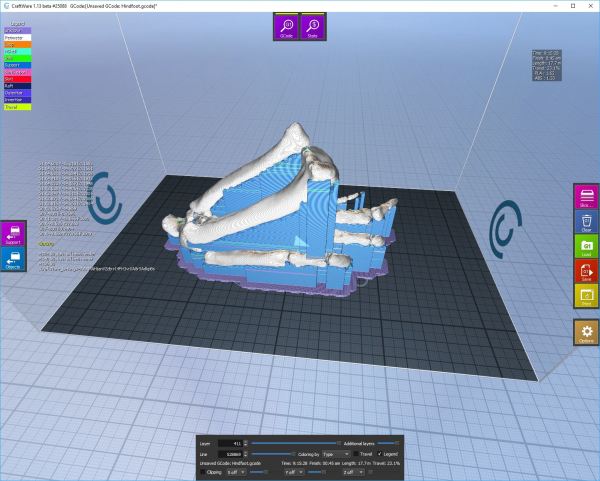
**update 21/2/19: Not only has Dremel moved to a waaay better slicing software (based on Cura), but the latest firmware (v1.5, 20180611) has enabled standard *.gcode support for the 3D20 model. Finally...** Last year I got hold of a Dremel Idea Builder 3D printer. It’s been great, and I’ve been able to print a... Continue Reading →
New data sets – Horse/Raindrops and a Welly footprint
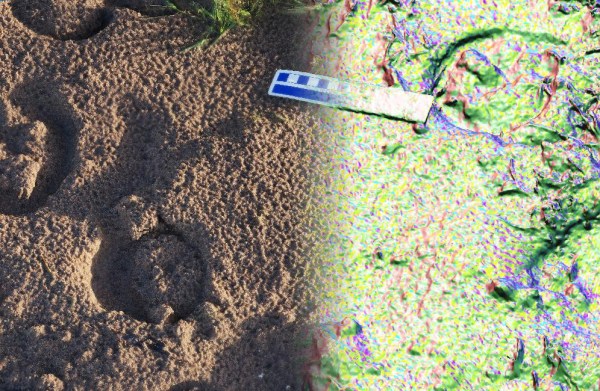
I've uploaded a couple more datasets to the neoichnology section. Welly Impression Not a lot to say here, human foot, wearing a wellington boot, in mud. I recorded this for making a guide (which may appear soon), and thought I may as well upload it and add to the collection. Horse footprints and raindrop... Continue Reading →
Heron Tracks added to site.
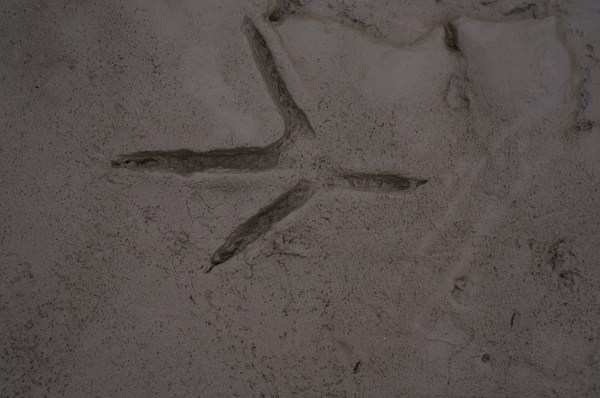
New data uploaded - Heron tracks in mud.
A visit to Denmark and Digitized Crocodile tracks
Last month I was fortunate to head over to Denmark and visit my friend and colleague Jesper Milàn at Geomuseum Faxe. We’ve worked together in the recent past (we have a chapter together in the forthcoming Dinosaur Tracks: Next Steps) but aside from a few conferences, we’ve never actually sat down in the same room to... Continue Reading →
New data uploaded – Horse trampled beach
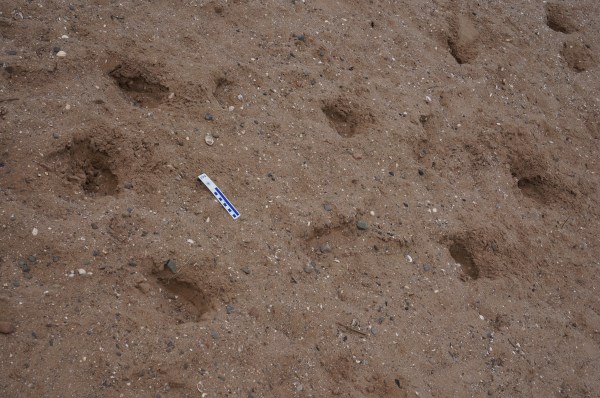
Just a quick post to say that I've added a new data set to the Neoichnology resources page. It's an interesting [to me at least] area of beach sand trampled by horses (I think 2-3, but didn't see the tracks being made), heading in two directions. I recorded it for two reasons: The first is... Continue Reading →
Sharing vs Presenting digital data -or- Please don’t use 3D PDFs; just upload obj/ply
This post is as much about initiating discussion as it is about my own thoughts on the matter, so feel free to comment away, here, or twitter, or google+ or wherever – I’m interested in thoughts and perspectives. So… 3D PDFs. They seem like a really good idea right? You can encapsulate 3D information to... Continue Reading →
The Historical Photogrammetry Challenge – over to you!
In 2014, colleagues and I published a photogrammetric reconstruction of the Paluxy River dinosaur ‘chase sequence,’ as generated from photographs taken before and during its excavation in 1940. (Blog post here). Photogrammetry has become pretty common now; commercial and open source programs are widely being used by all kinds of people, including palaeontologists, and there are... Continue Reading →
Weighing Dinosaurs (and other animals) with Meshlab
A couple of years ago, I was part of a group that published a method on calculating body mass in extinct animals from laser scans of their skeletons. The method involves separating the model into parts, and then using the qhull command to produce a volume that encloses the segment as tightly as possible. This... Continue Reading →
SVP teaser/Playing with renders
I've been trying to jazz up my talk for the Society of Vertebrate Palaeontology conference in Berlin next week, and also been using the opportunity to play with Maya's rendering abilities (and also avoiding writing a lecture!). So, you might expect to see a longer, more polished version of this at my talk at SVP:... Continue Reading →
New tracks added
Very short post to announce there's a couple of tracks added to the resources section - one modern (A deer track), and one fossil (A dinosaur track from Whitby). More complete blog posts to follow soon.