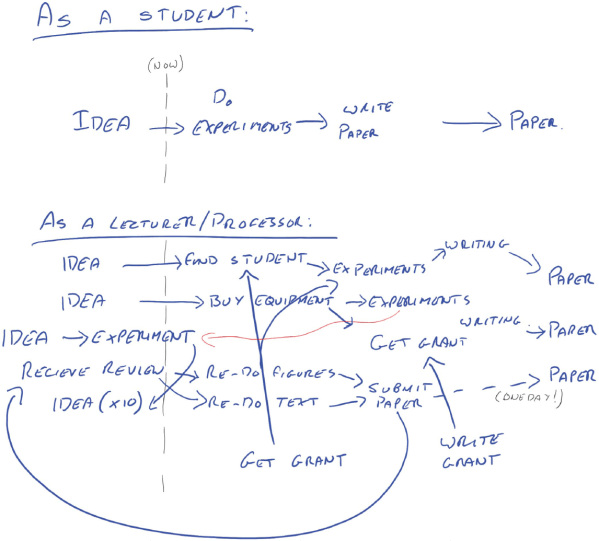
My extolling the wonders for productivity given by windows 8.1 and Onedrive, and my disappointment with Windows 10
News/Blog
SVPCA and the energising power of academic meetings
I'm back from SVPCA and after seeing all the active research, feel I can finish all my projects too... Except....
Sharing vs Presenting digital data -or- Please don’t use 3D PDFs; just upload obj/ply
This post is as much about initiating discussion as it is about my own thoughts on the matter, so feel free to comment away, here, or twitter, or google+ or wherever – I’m interested in thoughts and perspectives. So… 3D PDFs. They seem like a really good idea right? You can encapsulate 3D information to... Continue Reading →
Ugh!… Being useful? This is not what I signed up for!
As a palaeontologist, sometimes it can be difficult to justify what you do to the people down the local pub. From personal experience, I’ve learnt that when surrounded by a teacher, plumber, mechanic and farmer, announcing that the EU just gave you a substantial pot of money to look at 200 million year old dinosaur... Continue Reading →
I'm featured on May's Palaeocast. Go have a listen.
Listen to me on Palaeocast
(This guide was actually written 25/5/13, but should still be applicable. PDF here) This guide will hopefully provide a quick start to processing CT data and exporting models using 3D slicer (http://download.slicer.org/). The documentation available for Slicer is pretty fragmented and/or out of date (referring to considerably older versions), so this guide is based on... Continue Reading →
A rough guide to getting models out of CT scans using 3D Slicer (v4)
The Historical Photogrammetry Challenge – over to you!
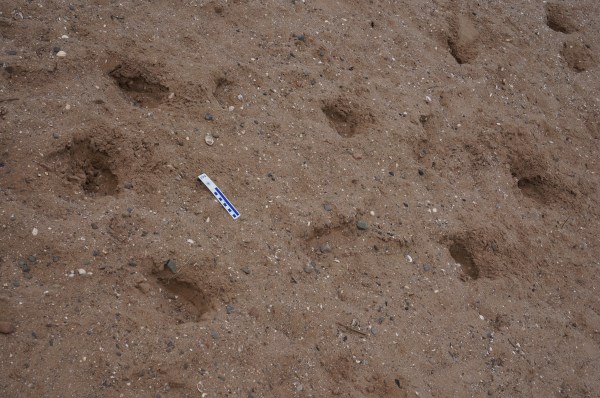
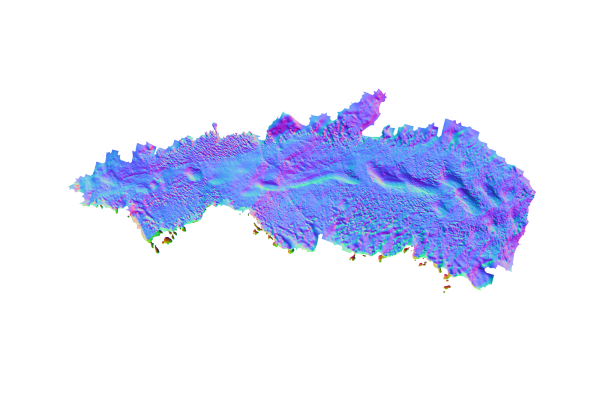
In 2014, colleagues and I published a photogrammetric reconstruction of the Paluxy River dinosaur ‘chase sequence,’ as generated from photographs taken before and during its excavation in 1940. (Blog post here). Photogrammetry has become pretty common now; commercial and open source programs are widely being used by all kinds of people, including palaeontologists, and there are... Continue Reading →
Weighing Dinosaurs (and other animals) with Meshlab
A couple of years ago, I was part of a group that published a method on calculating body mass in extinct animals from laser scans of their skeletons. The method involves separating the model into parts, and then using the qhull command to produce a volume that encloses the segment as tightly as possible. This... Continue Reading →
I love it when a plan comes together
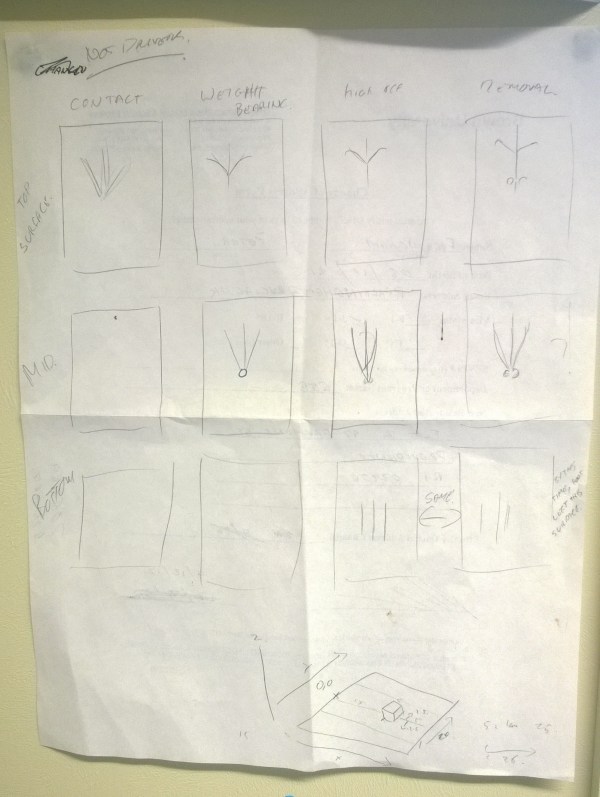
I was clearing out some papers from my desk draw, and came across this: This is an initial idea Steve and I sketched, one day in mid 2012, of how we thought some of the Amherst tracks were being formed. Ultimately, those first discussions lead to this figure in our recent paper: It's nice to see... Continue Reading →
The birth of a dinosaur footprint
Monday saw the release of a paper that Steve Gatesy and I have been brewing up for the past couple of years. The paper is published in PNAS, and is titled: The birth of a dinosaur footprint: Subsurface 3D motion reconstruction and discrete element simulation reveal track ontogeny. It's a bit of a long title,... Continue Reading →