I’ve written about the Asus ProArt P16 before. Back in 2024, I reviewed the original AMD CoPilot+ version with the RTX 4070 — a beautiful and powerful laptop that I genuinely loved. Then in 2025, I upgraded to the revised model with the RTX 5090 Mobile, tripling my VRAM from 8GB to 24GB and doubling RAM from 32GB to 64GB. That was a massive step up for my workflow — opening large CT datasets, running simulations, local LLMs, the works.
But it wasn’t perfect. And now Asus has announced something that might actually be.
RTX Spark
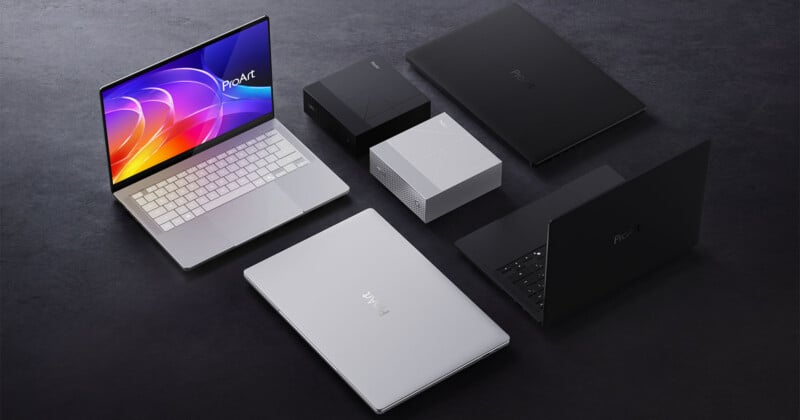
At Computex 2026, Asus debuted a new generation of ProArt PCs powered by Nvidia’s RTX Spark superchip. The P16 is the headline act, and the specs are interesting:
- Nvidia Grace CPU — 20 cores
- Blackwell RTX GPU — 6,144 CUDA cores
- Unified memory — up to 128GB
- AI performance — up to 1 petaflop
- Display — Asus Lumina Pro OLED, 4K, 100% DCI-P3, Delta E < 1, 1,600 nits max brightness
- Dimensions — 12.9mm thin, 1.77kg (3.9 lbs)
- Ports — USB-A, USB-C, HDMI, SD card reader
- Availability — second half of 2026
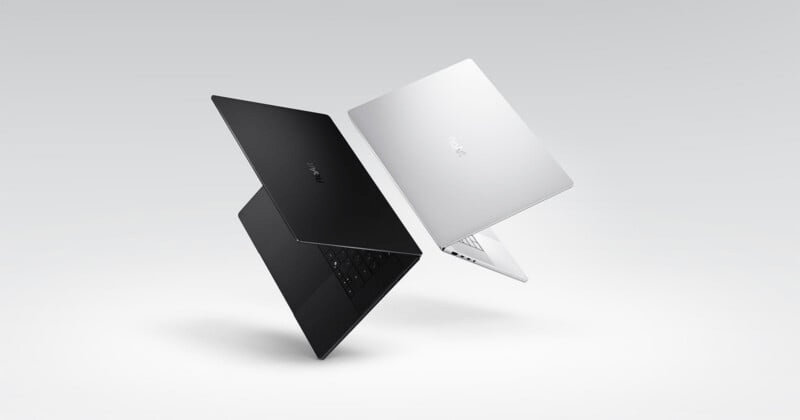
The chassis is CNC machined aluminium, available in Nano Black and Neo White.
Why this matters to me
The headline spec here isn’t the raw GPU power, the RTX spark seems to come out somewhere around 5070 (laptop) power. No, the real benefit is the unified architecture. RTX Spark combines the CPU and GPU on a single chip with unified memory. No more separate iGPU and dGPU, massive vRAM (and RAM) available, and hopefully significantly better battery life and performance on battery.
The iGPU/dGPU problem
If you’ve been following my Linux journey — and specifically the minor headaches of running Bluefin on this hybrid AMD+Nvidia laptop — you’ll know the iGPU/dGPU mix has been a persistent source of minor-but-constant irritation. The Nvidia dGPU crashes on login under GNOME, requiring a systemd workaround. Every Flatpak application wakes the dGPU during sandbox initialisation, even when it doesn’t need it — so opening a text editor takes an extra couple of seconds because the RTX 5090 has to power on from D3cold state. I’ve had to apply workarounds for GTK apps using GSK_RENDERER=cairo just to skip the GPU probe entirely.
None of that matters if there’s no separate dGPU. RTX Spark is the GPU. Unified memory means the system doesn’t need to juggle two graphics subsystems. If this works as well on Linux as it does on paper, it could finally be the end of those daily little frustrations.
Battery life?
My current 5090 model is a battery hog. Plugged in, I can get 110-120 tokens per second running a local LLM like Gemma 4. Unplug it and that drops to 10 tokens per second. Cyberpunk 2077 benchmark goes from 90+fps to about 40fps the moment I unplug the charger. The RTX 5090 pulls so much power that the battery literally can’t supply enough without throttling. Battery life in real-world office use is about 4-5 hours, which is fine but not great for a laptop I carry around to lectures and on fieldwork, and as soon as you do anything intense, that battery life can drop to an hour.
RTX Spark is marketed as being significantly more power efficient. The P16 is 13% thinner and 16% lighter than the current model, which suggests Asus has done something meaningful with the thermals. If even half of that efficiency promise is real, it would be a game changer for day-to-day portability.
The screen
On paper, the new display is an Asus Lumina Pro OLED with 4K resolution, 1,600-nit brightness, and full DCI-P3 coverage. The same as the current 5090 model, I think. The improvements in colour and brightness are fine, but what actually made the 2025 model feel like a genuine upgrade was the anti-reflective coating. On paper it’s about brightness and clarity, but in reality, the AR coating is the thing that transformed daily use. I can’t overstate how much screen reflections have plagued me over the years — particularly on Microsoft Surface devices and even the original ProArt P16. When you’re looking at dark images on screen (X-ray data, CT scans, anything scientific), reflections are a nightmare. The current model’s AR treatment is as good as a MacBook’s (perhaps even better). I can have mostly black on screen and barely see myself reflected in it. Hopefully the new RTX spark version retains that anti-reflective screen.
One thing I really hope they add
The current ProArt P16 has a decent touchpad, but it’s not haptic. The dial pad still isn’t haptic either — just a small glossy circle flush with the surface. After using haptic touchpads on MacBooks and some Windows ultrabooks, it’s become a feature I notice every time I go back to something without it. The precision and silence of a haptic surface is genuinely better than a mechanical click pad. It would be a small thing that makes a big difference to daily comfort.
Price?
No idea. No indications yet. The 5090 version of the current Proart P16 retails for about £5k (I did not pay that for mine, getting it second hand), and that only has 64GB of RAM. In these rampocalypse times I expect the 128GB RTX Spark version will be more. Windows Weekly mentioned numbers approaching $10,000 but that’s gotta be too high… right? This is the biggest unknown, and obviously is make or break as to whether this laptop would make any sense at all.
The bottom line
I love the ProArt P16. It’s the laptop I use every day for research, writing, and general computing. The RTX Spark version looks like it addresses the main weaknesses of the current model: power efficiency, the iGPU/dGPU headaches on Linux, and portability. 1.77kg is noticeably lighter than what I’m carrying now, and the unified memory architecture could certainly open some opportunities around AI,
It arrives in the second half of 2026. I’ll be watching closely. Hopefully I’ll be able to afford it. Or maybe get a review unit?


Leave a Reply