OpenMVG is a pipeline for structure from motion. I’ll go through the basics of downloading, installing, and running it on Windows 10. It does actually compile on Windows, but it can be a royal pain in the rear to get everything set up properly (requiring Visual Studio, Python, and a lot of luck). Far... Continue Reading →
Generating a Photogrammetric model with MeshRecon
Continuing my series of using photogrammetry software, we come to MeshRecon, by Zhuoliang Kang. This is one of my favourite photogrammetry pipelines, and it's dead easy to use: Download the Zip file from Kang's Webpage here: http://zhuoliang.me/meshrecon.html Unzip the folder somewhere, and inside are 4 sub-folders (img, meshrecon, results, and vsfm), a readme, and a... Continue Reading →
Generating a Photogrammetric model using VisualSFM, and post-processing with Meshlab
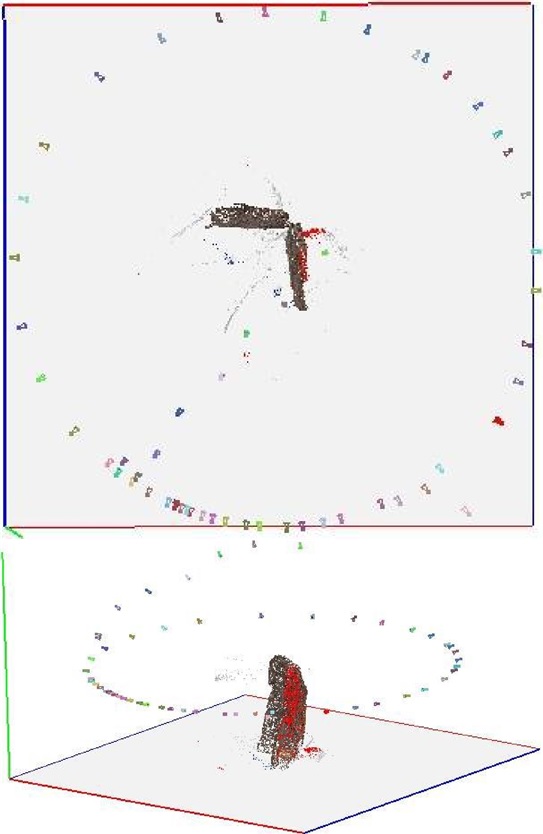
This is a re-post of a document I placed on Academia.edu a few years ago. In fact, that academia paper has sat in Academia.edu's top 0.5% of papers in terms of views for some time. However, I'm reposting for two reasons: 1. Academia.edu have added so many 'premium' (i.e. costly) features that I'd like it... Continue Reading →
Quick ‘n’ Dirty guide for making photogrammetric models with Agisoft Photoscan
Ok, this isn’t really necessary, but I’m posting it for completeness sake as part of an upcoming blog post. This will just give you a quick rundown on how wiz through Agisoft’s Photoscan and generate a model. If you’d like a more in-depth piece, I suggest Heinrich Mallison and Oliver Wing’s paper in Journal of... Continue Reading →
Installing Bash on Windows 10
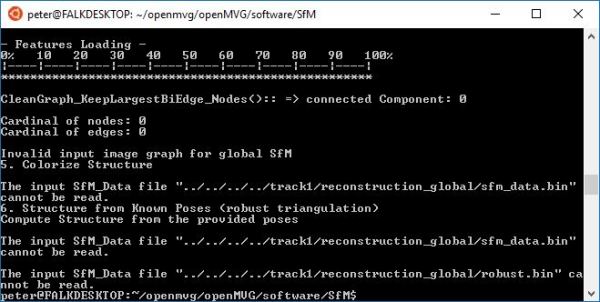
The recent update for Windows 10 enabled a feature that I’m sure has gone unnoticed by many: You can now install a native linux terminal in Windows. Who cares? I hear you ask. Well, I’ll be writing up guides on some open source software soon, and using Bash on Windows 10 is waaaaay easier than... Continue Reading →
The perils of a weak link in an ecosystem chain: How OneDrive’s changes are pushing me out of the windows ecosystem.

For a moment there, between 2012 and 2015, there was a glorious time where it all came together for me. I took to windows 8.1 immediately – it’s the first operating system I’ve ever bought outside of a new computer. I had it on my home computer, my work computer, and my phone. Settings and... Continue Reading →
Why Windows 8.1 and Onedrive are awesome (and Windows 10 is RUBBISH)
My extolling the wonders for productivity given by windows 8.1 and Onedrive, and my disappointment with Windows 10
(This guide was actually written 25/5/13, but should still be applicable. PDF here) This guide will hopefully provide a quick start to processing CT data and exporting models using 3D slicer (http://download.slicer.org/). The documentation available for Slicer is pretty fragmented and/or out of date (referring to considerably older versions), so this guide is based on... Continue Reading →
A rough guide to getting models out of CT scans using 3D Slicer (v4)
Weighing Dinosaurs (and other animals) with Meshlab

A couple of years ago, I was part of a group that published a method on calculating body mass in extinct animals from laser scans of their skeletons. The method involves separating the model into parts, and then using the qhull command to produce a volume that encloses the segment as tightly as possible. This... Continue Reading →
SVP teaser/Playing with renders
I've been trying to jazz up my talk for the Society of Vertebrate Palaeontology conference in Berlin next week, and also been using the opportunity to play with Maya's rendering abilities (and also avoiding writing a lecture!). So, you might expect to see a longer, more polished version of this at my talk at SVP:... Continue Reading →

