Free software workflow from CT scan to FEA results
A free/opensource workflow from CT scan to FEA

Palaeontologist: Dinosaur Footprints – Biomechanics – Simulation
Free software workflow from CT scan to FEA results
In these COVID times, I've been required to do all my lecturing online. LJMU have continued to give practicals face-to-face, but the lectures are being delivered via the internet. In almost all cases so far, I've given live lectures over Zoom, and this has worked really well. Not only have the lectures been delivered smoothly... Continue Reading →
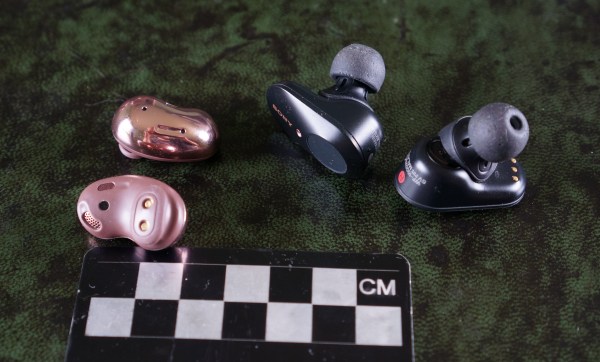
When the Galaxy buds live were announced, I was excited that they might be all that I'm looking for in a pair of truly wireless earbuds (TWE); comfortable, modern, with active noise cancellation (ANC) and with good mics. The initial reviews seemed to corroborate this, with some caveats, so I ordered a pair to give... Continue Reading →

Today sees the online (in press) publication of work I've been showing off since early in my Marie Curie Post-doc, way back in 2012! Falkingham, P.L., Turner, M.L. and Gatesy, S.M. (2020), Constructing and testing hypotheses of dinosaur foot motions from fossil tracks using digitization and simulation. Palaeontology. doi:10.1111/pala.12502 The paper's open access, so click... Continue Reading →
The LJMU Scholarship scheme has opened once again. PhD's on offer: Biomechanical function of the metatarsals in digitigrade animals.Using computer generated social stimuli to examine the behavioural, hormonal, and neural responses to agonistic signals in a highly social fishMolecular and 3D morphological analysis of fossilised parasitesParticle Physics for Manufacturing Unlike previous years where students applied... Continue Reading →

This post contains amazon affiliate links, but remember to shop around and support local businesses if you can! I recently purchased a new set of earbuds, the Sony WF-1000XM3. This is for personal use (music and podcasts at home and during commute), and potentially as a headset for the multitude of Zoom/Teams/Skype meetings and the... Continue Reading →

It's been a few years since I've done a review of all the software I've tried. It's time to update that, with more free software, and the commercial (paid) software I've been trying out. I was trying to find a way to include a sort-able and filter-able table, but that requires a business plan apparently,... Continue Reading →

I’ve covered 3DF Zephyr before, both the free version, and the professional version. Today 3D Flow released version 5.0, which claims significant speed ups and quality improvements, so I thought I’d run my standard dataset through it. I'm using the 14 day trial version of Lite. The free version is still available but limited to... Continue Reading →
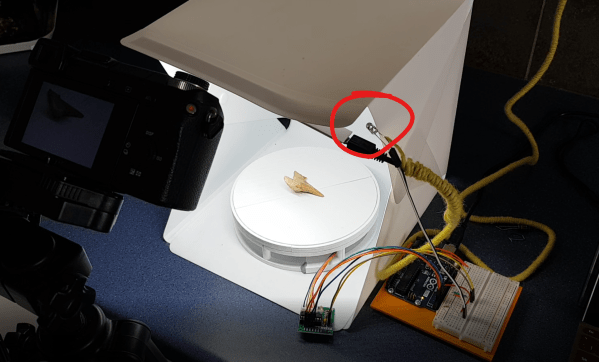
I've detailed my Arduino photogrammetry setup, first here when it just used my phone, then here when I cludged together a physical trigger in the form of a servo motor. That worked really well, and I've made a bunch of models with it that have come out absolutely superb. However, to get the servo motor... Continue Reading →

A running theme of this blog (and my work in general) is in using freely available software when I can. There's multiple reasons for this; the main and most obvious being saving money. But there are other reasons too - losing access when changing institutions (or when licensing changes and something becomes unaffordable) is a... Continue Reading →
 Prof. Peter L. Falkingham