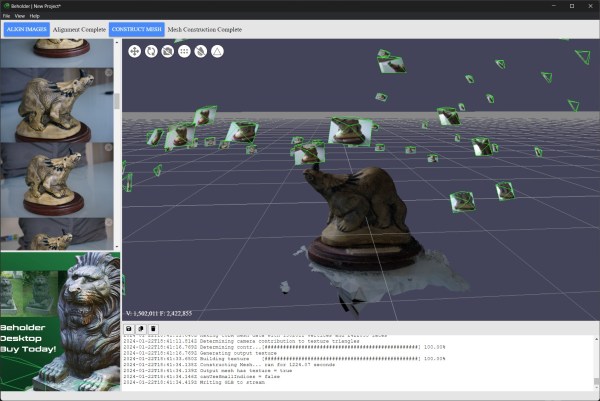
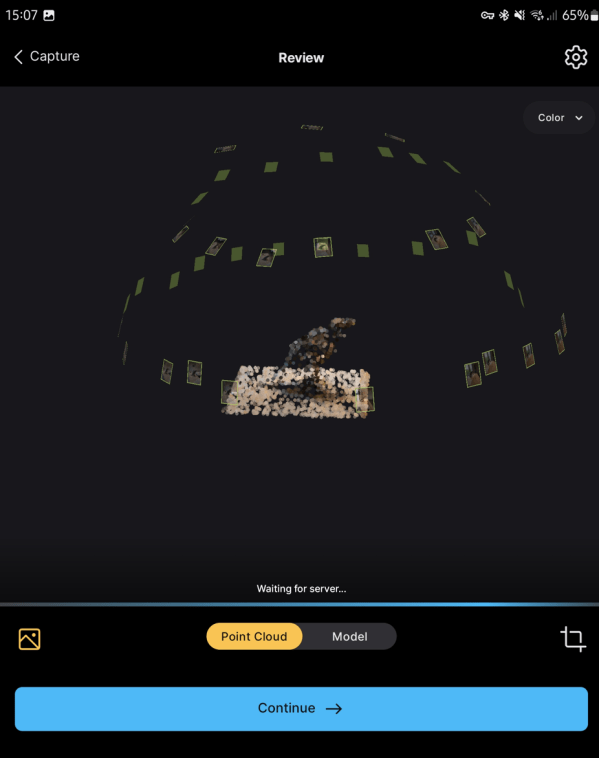
As with so much of my gadget life, I've been looking longingly over at the Apple ecosystem, in this context specifically for the amazing 3D scanning apps that are available for the iPhone and iPad. Because those devices have lidar on the back, 3D scanning apps work really well - using the camera to texture... Continue Reading →
News/Blog
[Academic Tech] Surface Laptop Studio (gen 1) long term review
Back in September last year, I wrote a post about the Surface Laptop Studio I'd just bought. I'd only had it a few days at the time, and so it was very much a first impressions post. I've now had the device over a year, and with the second gen released just last month, now... Continue Reading →
Reality Capture v1.3: The fastest just got faster
Yesterday Capturing Reality released Reality Capture 1.3. Key among the change log was "faster model reconstruction and texturing", as well as some improved UV unwrapping. I've enjoyed the speed of Reality Capture for a while, and last year declared myself a reality capture convert. In fact, I now use Reality Capture as a matter of... Continue Reading →
Windows is getting me down
**WARNING - this is a very niche rant** I'm quite a tech nerd. I enjoy gadets, and phones, and even writing software and addons. A big part of this is that I just generally enjoy interacting with my computer's operating system to get stuff done. I've been firmly embedded in Windows most of my life,... Continue Reading →
Updated height map material for blender – use images or colour ramps
Recently for our paper on hominid tracks, I was visualizing some topographic images of footprints using blender. We were asked by the journal not to use the standard red-green-blue colour scale as it's not great either for colour blind people, or for conveying subtle changes in topography. Rather than use black-white, as I've done in... Continue Reading →
Job opportunities – Research assistant and two post-docs
As part of the ERC consolidator grant (now UKRI Horizon Guarantee), I'm looking to hire three people to help me work on dinosaur tracks and locomotor mechanics: First up, a Research Support Assistant. This is pretty broad, but I'm looking for someone to help with CT scanning/segmenting and X-ray (#XROMM) data collection, as well as... Continue Reading →
The arches of hominin footprints reflect motion, not just anatomy – once again ‘footprints are not feet’
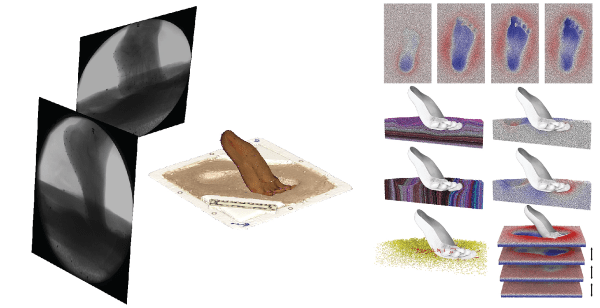
In this post, I want to tell you about a paper that I co-authored with Kevin Hatala and Stephen Gatesy, which was published in Nature Ecology & Evolution. It’s called “Arched footprints preserve the motions of fossil hominin feet” and it’s about how we can use fossil footprints to learn about the way our ancient... Continue Reading →
[Photogrammetry] Meshroom 2023.1 released
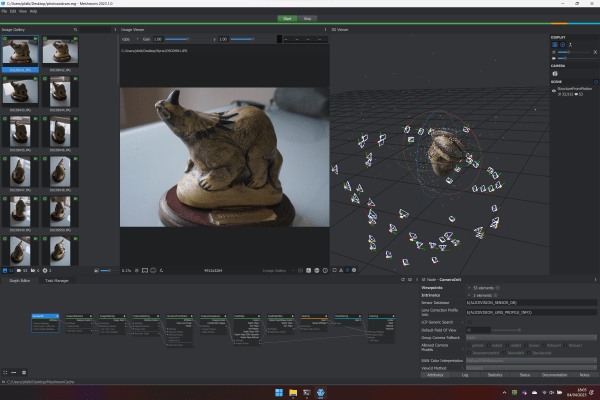
I've had a keen eye on Alicevision Meshroom since it's first major release back in... 2018? Development of the open source photogrammetry software has felt slow for the past few years, but just this week a new release was pushed out, 2023.1.0. Here's the official new feature list: Release Notes Summary Major improvements of the... Continue Reading →
A.I. (well, machine learning) and Dinosaur tracks
It's a while since I've posted about new papers, so I'm going to have a series of posts catching up on 2022's papers. First up is Jens Lallensack's cool paper in Interface about using AI and machine learning to distinguish between theropod and ornithopod tracks. For those unfamiliar, ornithopod tracks and theropod tracks are both... Continue Reading →
[Academic Tech] Surface Laptop Studio with an eGPU – performance and review.
My last post compared the raw performance of my new Surface Laptop Studio (SLS) against my old Desktop and my wife’s M1 Macbook Pro. The results were not particularly exhilarating to say the least. The SLS was mostly ok when plugged in, holding it’s own against the MacBook Pro in simple rendering/photogrammetry, but losing out... Continue Reading →