Well, we start 2025 off with a new paper in Biology Letters reviewing dinosaur locomotion. This is part of the 200 years of dinosaurs special collection, containing a bunch of reviews on different areas. The paper is available fully open access here: https://royalsocietypublishing.org/doi/10.1098/rsbl.2024.0441 As an added bonus, I was asked to do an online seminar... Continue Reading →
[Academic Tech] Asus Proart P16 AMD CoPilot+ Review: Incredible performance and design

Welp, it’s new computer time. My Surface Laptop Studio was starting to slow me down a bit with work, and wasn’t keeping up with games, even with the eGPU. I was also starting to feel like I was missing out on the new copilot+ PC stuff – I dabble with local LLMs and stuff, and... Continue Reading →
No more Agisoft? Turn to Reality Capture with this guide
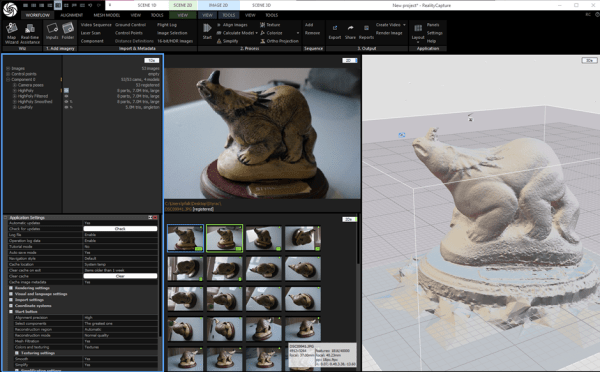
I’ve had multiple emails now from different people working at US government agencies – Agisoft Metashape is no longer available nor allowed because it’s made by a Russian company. Below, I’ll provide a run through of Reality Capture as it stands today. The main competitor to Metashape is Reality Capture, now owned by Epic Games. ... Continue Reading →
‘[New] Outlook’ – everything that’s wrong with modern software
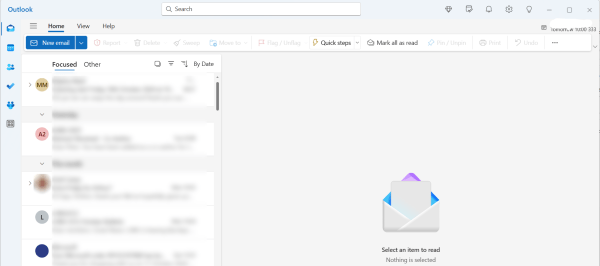
[FYI - This post is mainly just for me to keep track of my venting] The time has finally come - Mail and Calendar, my favourite email application in a long time, has now been completely replaced by 'new' Outlook, and my attempts to revert are met by an instant reinstallation of the naff new... Continue Reading →
[Academic Tech] Philips 40″ 5K2K Ultrawide Thunderbolt monitor

A shortish review here about the Monitor I've been using at work for about 6 months now. It's the Philips 40" curved monitor: I needed a new monitor to go with the new computers my team and I got set up with, and I very specifically wanted a very high-resolution monitor for multi-tasking. I wasn't... Continue Reading →
Dabbling with Linux again. And quickly giving up… again.

I tried installing linux again. Got frustrated, went back to windows.
Focus stacking and photogrammetry

I experimented with macro photogrammetry using a small fossil and a Nikon Z8 camera with MC105 VR S lens. I used focus-shift and focus-stack with shallow depth of field. Reality Capture produced a good model from the focus-stacked images, but using the lens at f51 also yielded a great result. Both methods have their benefits.
An Excellent Free and Open Source focus-stacking solution

I struggled with merging focus-shifted images using Photoshop and Affinity Photo but found success with Helicon Focus, though with some limitations. I then discovered focus-stack on GitHub, a simple command-line tool, which was comparable to Helicon Focus.
My experience training a local LLM (AI chatbot) on local data…

The user encountered challenges while attempting to use various methods to feed information into local Large Language Models (LLMs) via RAG (Retrieval-Augmented Generation). They explored methods such as Nvidia Chat with RTX, Ollama with Python scripts, and Ollama with Open-webui. Results varied, with some methods providing inaccurate or incomplete outputs. Comparatively, Microsoft Co-pilot, running GPT4-Turbo, significantly outperformed the local methods.
[Academic Tech] JBL Tour One M2 Noise Cancelling Headphones

*Note, I was sent these headphones for review by JBL nearly a year ago, but they've had precisely zero input into this review (obviously, given I haven't written it until now), and it doesn't affect what I'm writing at all. The only benefit I stand to gain is the amazon affiliate link I'll shove at... Continue Reading →
 Prof. Peter L. Falkingham